work / pixel-office · Live · MVP
Pixel Office
A retro pixel virtual office with proximity voice chat.
The COVID-era virtual offices fascinated me, and the problem they were solving has not gone away. Working from home, you lose the tap on the shoulder: the quick word with a colleague that never warranted a meeting. Booking a calendar slot for a two-minute question is exhausting, and messaging often lands badly. So: a room where you can see who is around and open to talking, walk over, and let others join the conversation if it is open.
Remote teams lose the ambient presence of a shared room.
A multiplayer pixel-art office: walk between rooms, emote, set a status, and talk. Voice is a WebRTC mesh with per-peer volume by distance, so conversations feel spatial.
- React
- Playroom Kit
- WebRTC
- Web Audio
Never hand-roll netcode. Presence, rooms and state came free; only the voice mesh was worth building.
Screenshots from the app in actual use, not mockups.
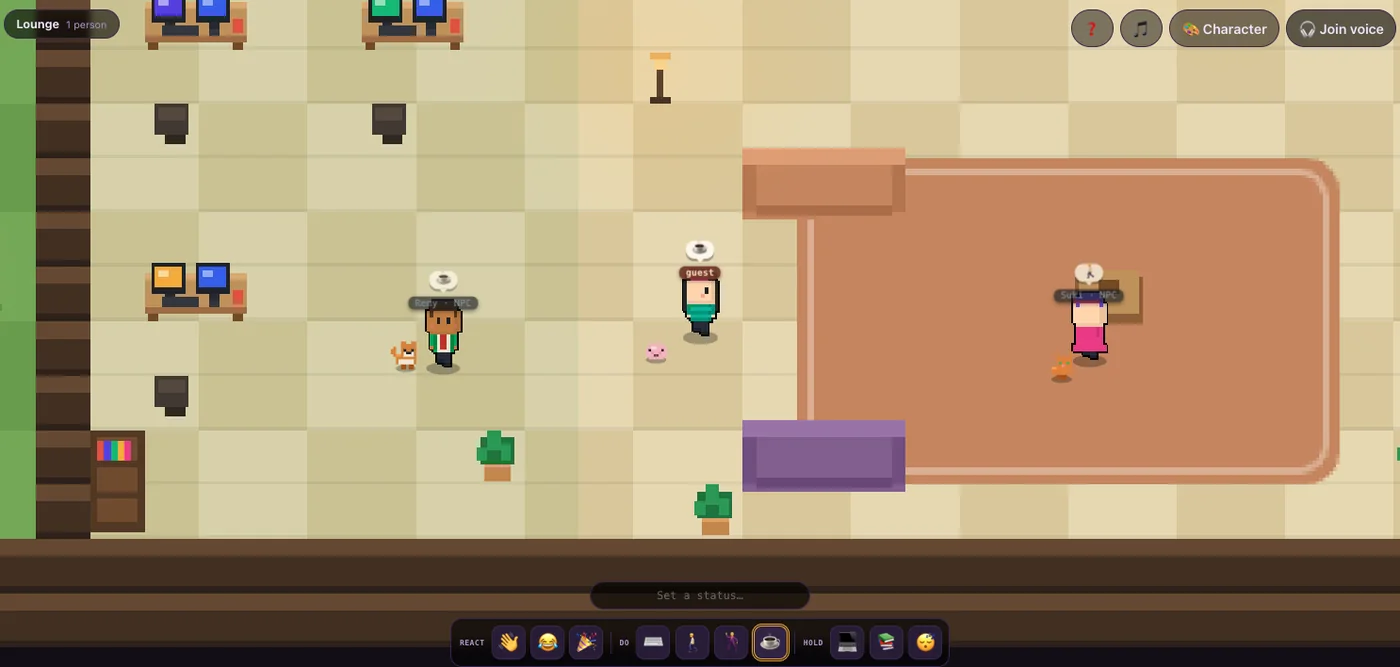
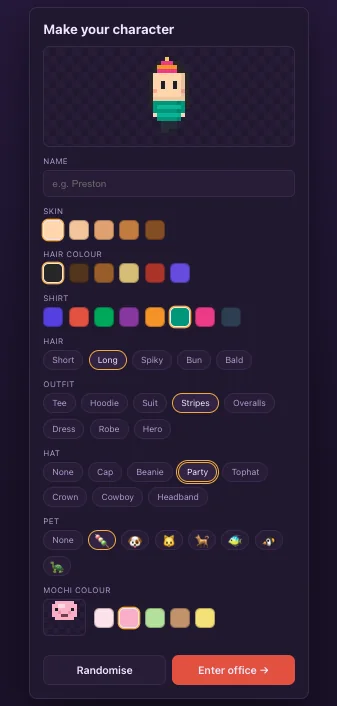
The real thing
A pure-frontend replica with mock data: nothing is saved, nothing leaves the page. The real app is richer; this is the feel of it.
Prefer the real thing? Open the live apploading the demo…
The thinking
user · pains · gap · tools
Small remote teams and friend groups who miss ambient presence, not another meeting tool.
Target user
- Remote work loses the walk-over-and-ask moment
- Video calls are all-or-nothing: full meeting or total silence
Pain points
A browser-only pixel office with spatial voice (louder as you walk closer) and zero backend to host, where the URL is the invite.
Gap in the market
- Playroom Kit (multiplayer state)
- WebRTC mesh + Web Audio
- Claude Code (build)
- Procedural pixel sprites
AI + tooling
- Proxemics: spatial audio mirrors physical distance, so conversation feels natural
- Ambient presence over scheduled meetings
- Render-from-state (no game engine)
Frameworks
- Pilot done: ran a session with a group of friends and it worked as intended, with multiple users connected and proximity voice holding up
- TBD: a longer run with a real team rather than a one-off test
Success metrics
Photograph your wardrobe once, get outfits with reasons.